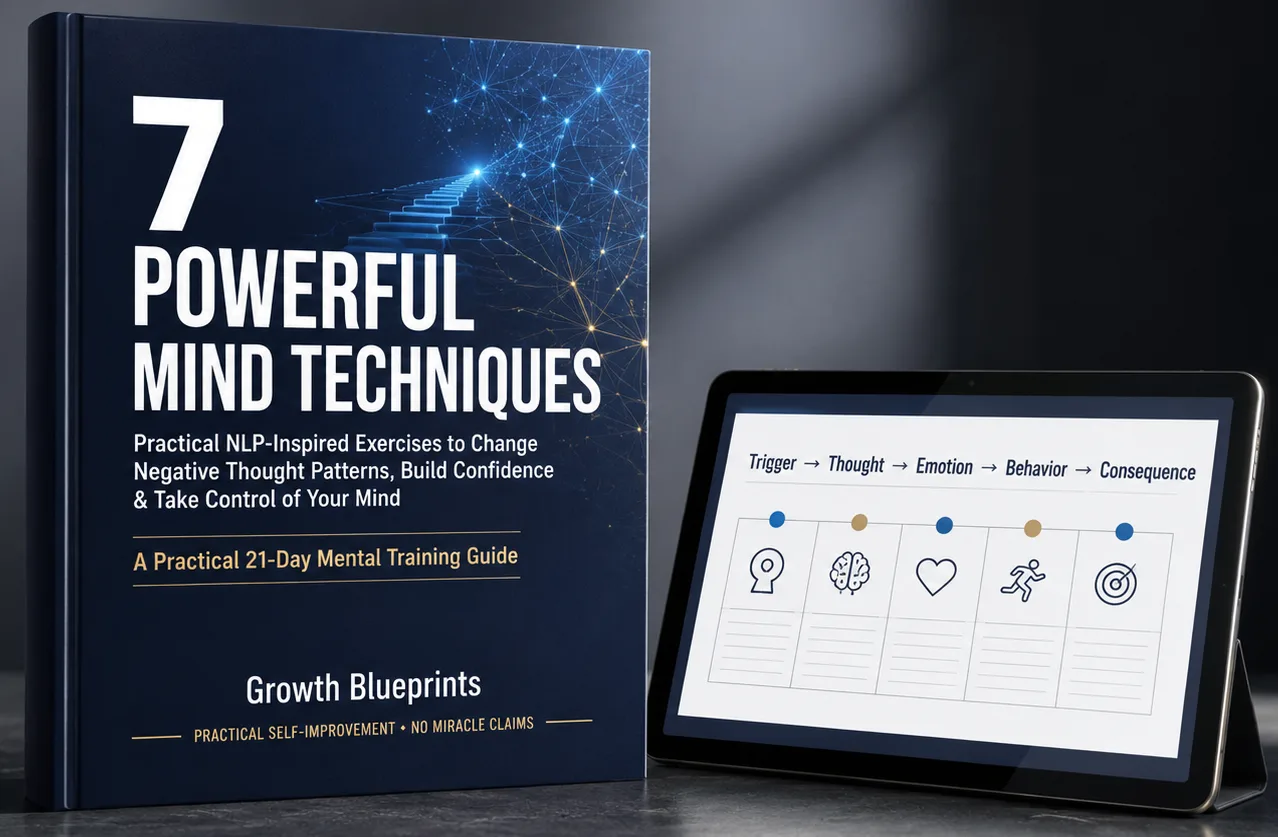
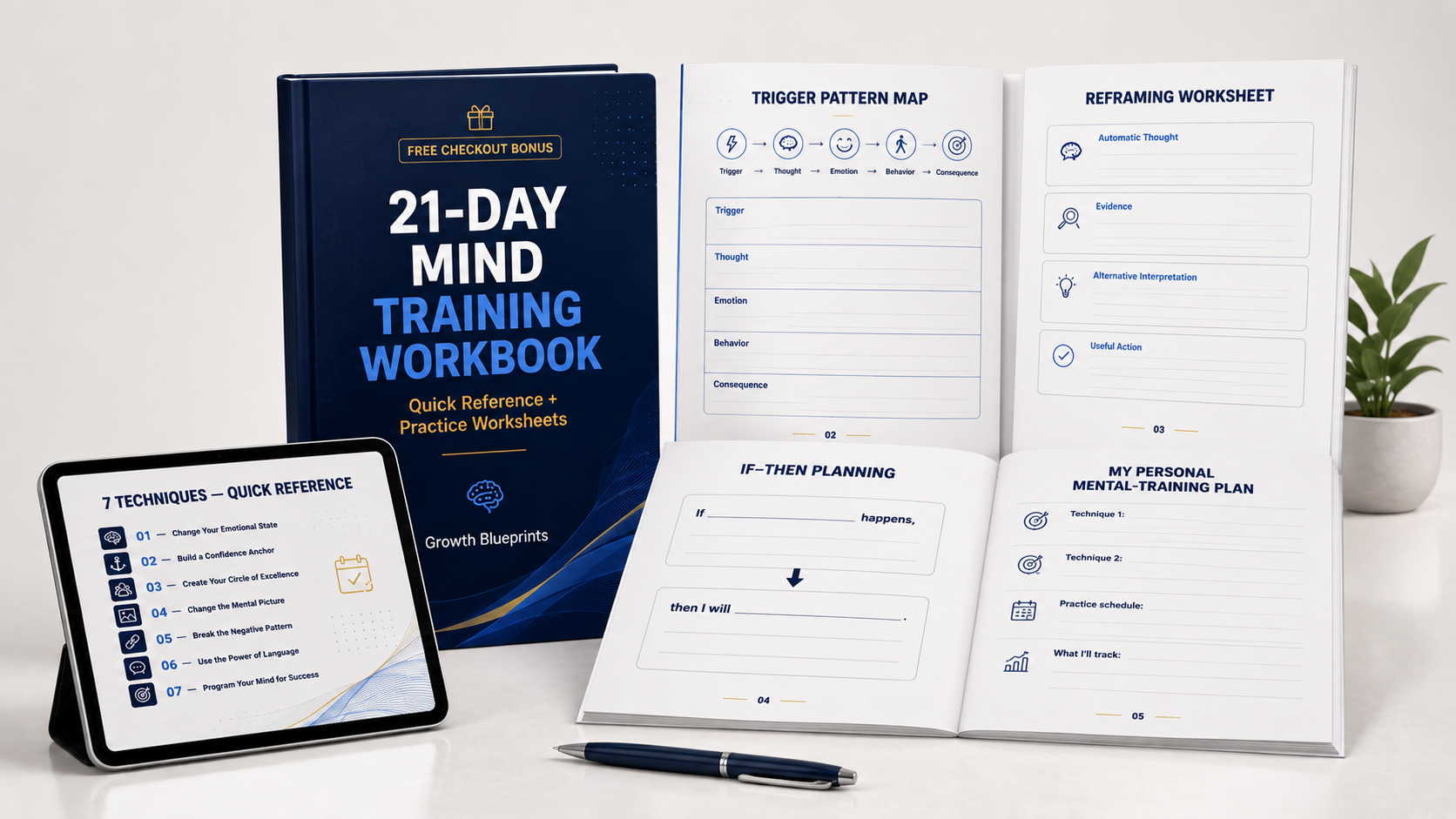
For ₹199, get 7 short exercises for the moments when you replay what you said, delay the task you care about, or walk into an important conversation already expecting the worst. No motivational slogans. Just a next step to practise.

You replay the conversation. A late reply becomes a warning sign. The task stays open even though you promised yourself you would start. Before a meeting, your mind is already rehearsing the worst outcome.
Knowing the pattern is not the same as changing your next move. The hard part is the five seconds when the old reaction arrives before your better judgment does.
This guide gives you short exercises to rehearse before, during and after those moments—so you are not searching for an answer while your mind is already racing.
Identify the moments that reliably pull you into overthinking, avoidance, defensiveness or self-doubt.
Separate the event from the story your mind instantly attaches to it.
Rehearse a response you can actually use instead of demanding that you “just think positive.”

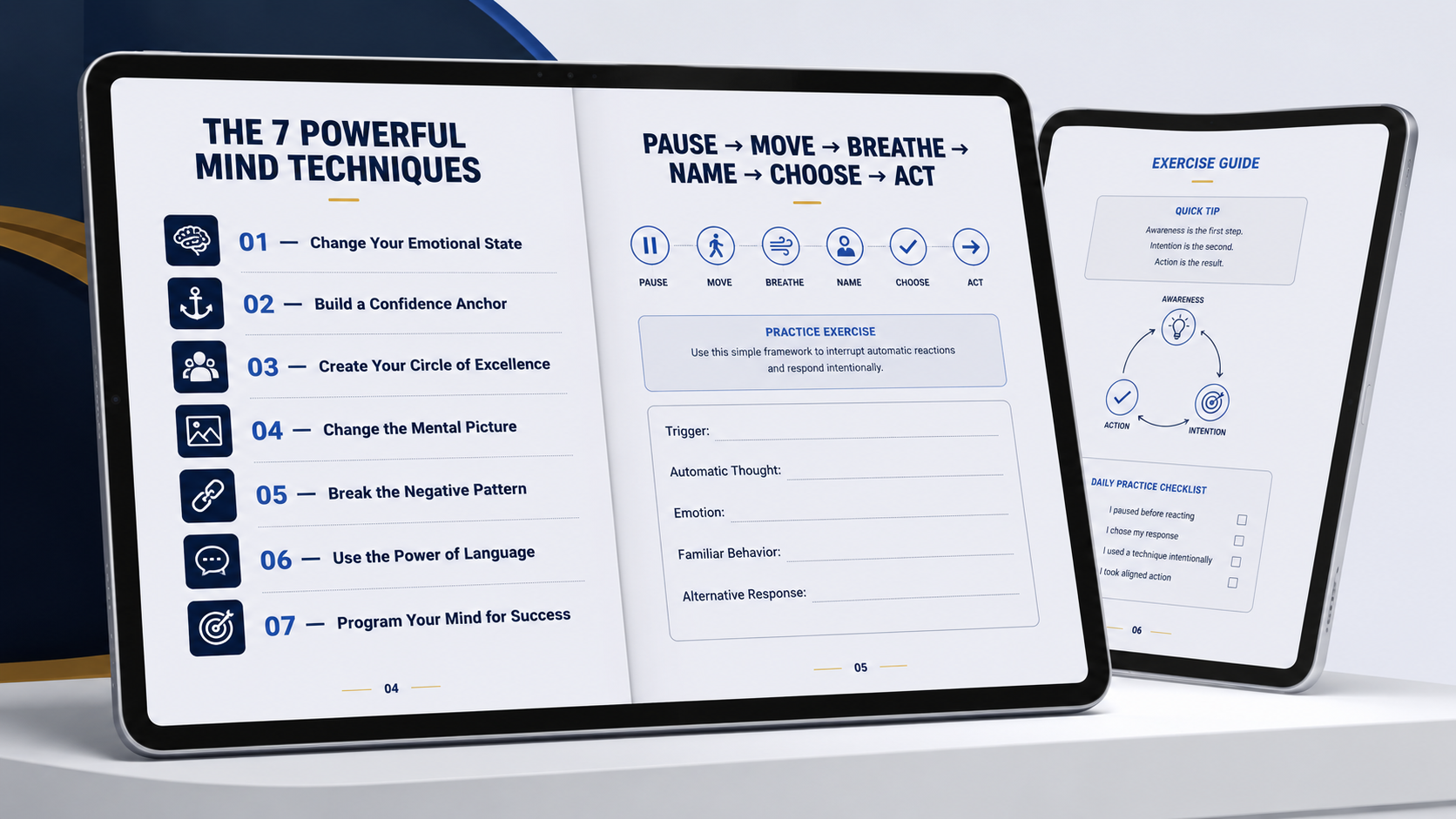
Use breathing, body relaxation, labeling and an interpretation check before reacting.
Create a simple physical cue linked to a rehearsed resourceful state and practice it before challenges.
Mentally rehearse interviews, presentations, meetings and difficult conversations in a more useful state.
Experiment with size, distance, brightness and perspective to change how you relate to the image.
Use Pause → Move → Breathe → Name → Choose → Act to interrupt familiar loops.
Challenge words like always, never, can't and have to, then replace vague thinking with precise questions.
Define the result, rehearse the process, anticipate obstacles and create If–Then actions.
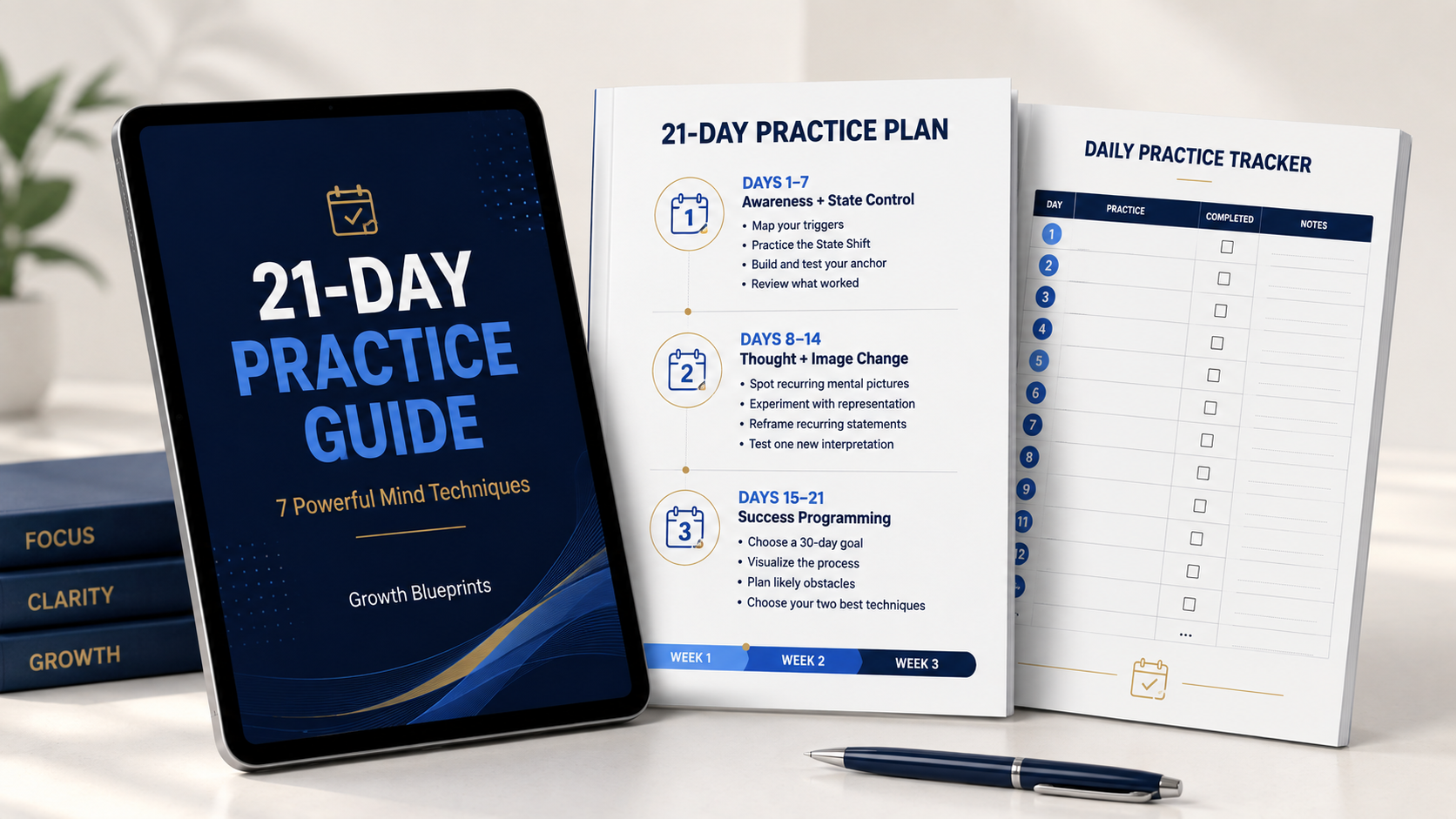
Follow examples, reflection prompts and a 21-day structure designed to turn the exercises into repeated practice.
Use this 21-day structure to practise deliberately. It is a schedule for repetition—not a promise that anyone changes on a biological deadline.

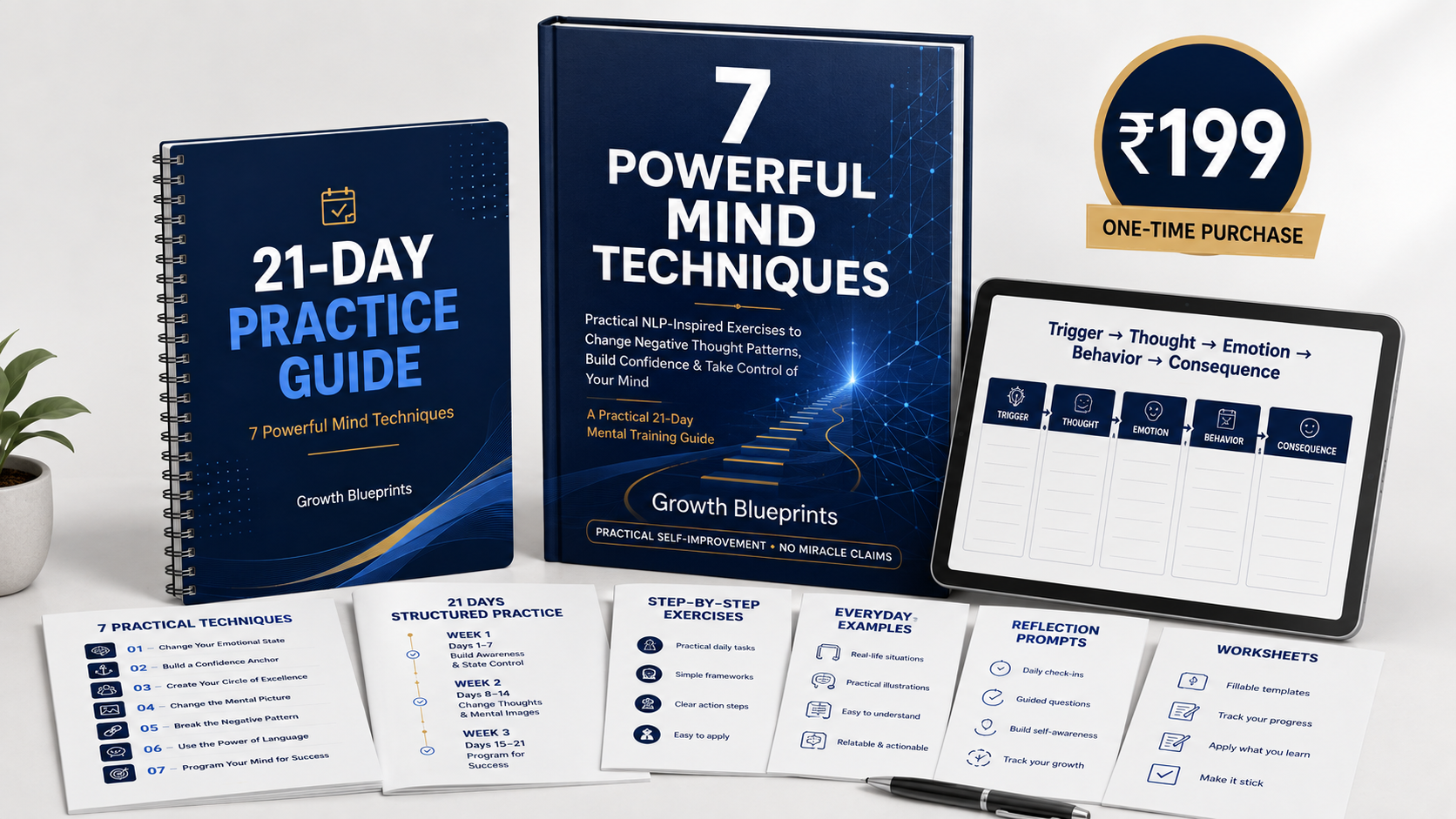
Inside you'll get the complete ebook, seven step-by-step techniques, examples for everyday situations, reflection prompts and the full 21-day practice schedule.
“Will this really help me?” is the right question. You are not buying a promise of a new brain in 21 days. You are buying a structured set of exercises you can test, practise and keep using if they prove useful to you.

No. The exercises are written for beginners. “NLP-inspired” describes the style of several exercises; no prior NLP knowledge is required.
That's okay. Several exercises can use words, sensations, breathing, posture and simple descriptions rather than vivid mental imagery.
There is no such guarantee. The aim is to help you notice patterns and practice more deliberate responses. Persistent or severe symptoms deserve support from a qualified professional.
No. “Reprogramming” is a practical metaphor for repeatedly practicing different ways of interpreting and responding. Twenty-one days is the structure of the program, not a biological deadline.
No. This is educational self-development material, not psychotherapy, diagnosis or medical treatment.
For ₹199, get the 7 exercises and the 21-day plan. Start with Day 1, test one exercise in a real situation, and decide for yourself whether it earns a place in your routine.